By Jia Tianqi, Correspondent
From January 23 to 25, 2026, the 6th International Conference on Consumer Electronics and Computer Engineering (ICCECE 2026) was successfully held at Wuhan Institute of Technology. Hosted by Wuhan Institute of Technology, the conference was jointly organized by the School of Computer Science and Engineering (School of Artificial Intelligence) and the Hubei Key Laboratory of Intelligent Robotics. It attracted hundreds of experts and scholars from universities, research institutions, and industry worldwide, who conducted in-depth exchanges and discussions on cutting-edge fields such as consumer electronics, artificial intelligence, the Internet of Things, and network information security.
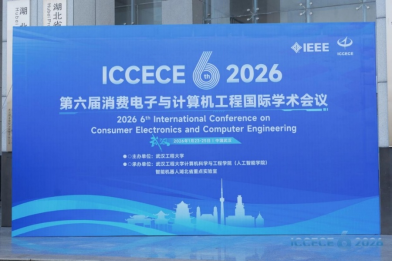
The conference officially opened on the morning of January 24. Professor Yao Huaiying, Vice President of Wuhan Institute of Technology, delivered a welcome speech on behalf of the organizer. He extended a warm welcome to all guests and emphasized that this high-level international conference serves as an important platform for the university to deepen international cooperation, promote interdisciplinary integration, and support the development of the electronic information industry. Professor Yao expressed his expectation that the conference would foster academic exchanges, spark innovative ideas, and drive the transformation of research outcomes, thereby injecting new momentum into scientific research and talent cultivation in relevant fields.
The opening ceremony was presided over by Professor Xu Huaxin, Dean of the School of Computer Science and Engineering (School of Artificial Intelligence).
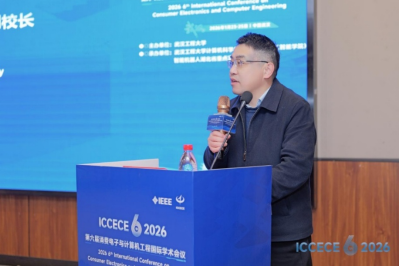
Speech Delivered by Professor Yao Huaiying, Vice President of Wuhan Institute of Technology
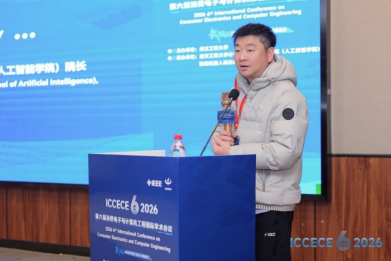
Professor Xu Huaxin, Dean of the School of Computer Science and Engineering (School of Artificial Intelligence), presided over the ceremony
During the conference, four renowned scholars delivered insightful keynote speeches. Professor Wang Zhongyuan (Wuhan University) presented “Trustworthy Face Recognition in Social Security”, discussing identity authentication technologies under challenges such as mask occlusion and deepfake attacks.- Professor Liu Leyuan (Central China Normal University) introduced “High-Fidelity Twin Digital Human Generation Technology and Its Application in Autism Intervention”, showcasing innovative applications of digital humans in medical rehabilitation. Professor Ma Jiayi (Wuhan University) reported on “Application-Oriented Multimodal Image Fusion”, systematically elaborating on cutting-edge methods and the broad prospects of image fusion technology. Professor Jiang Junjun (Harbin Institute of Technology) delivered an online presentation on “Multimodal Information Fusion and Intelligent Perception”, exploring challenges and solutions for intelligent perception systems in open environments.
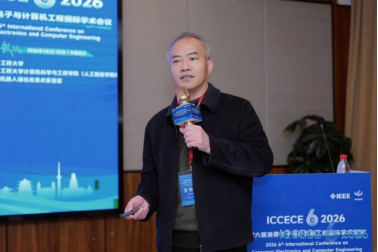
Professor Wang Zhongyuan, Wuhan University
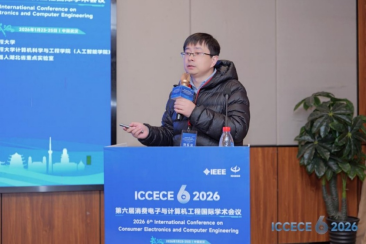
Professor Liu Leyuan, Central China Normal University
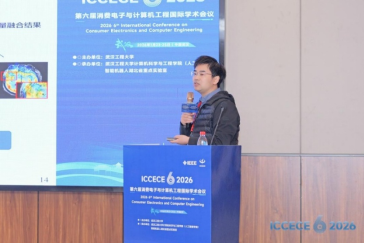
Professor Ma Jiayi, Wuhan University
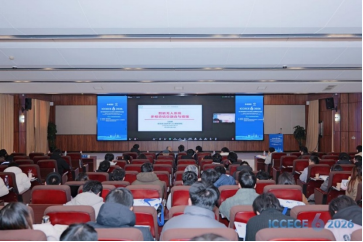
Professor Jiang Junjun, Harbin Institute of Technology (Online Report)
In the oral presentation session, young scholars presented their latest research findings, covering hot topics such as emotional interaction for service drones, lightweight retail packaging inspection, and low-light image enhancement. The poster exhibition featured cutting-edge research from institutions including Northwestern Polytechnical University, Wuhan University of Technology, and the Chinese Academy of Sciences. The works spanned interdisciplinary fields such as system security, maritime target tracking, Internet of Vehicles security, and rehabilitation assistance systems, creating a vibrant atmosphere for on-site academic exchanges.
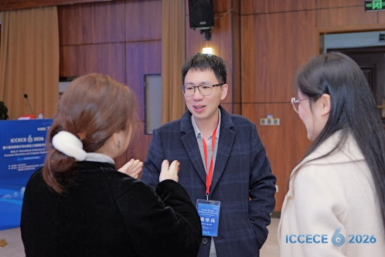
Over three days, the conference adopted diverse formats, including keynote speeches, oral presentations, poster exhibitions, and live online sessions. It built a high-level, open platform for academic dialogue and industry-university-research collaboration among scholars, engineers, and students worldwide working in consumer electronics and computer engineering. The successful event has significantly enhanced Wuhan Institute of Technology’s international visibility and academic influence in related disciplines, while also supporting technological innovation and talent aggregation in the electronic information industry in Central China.
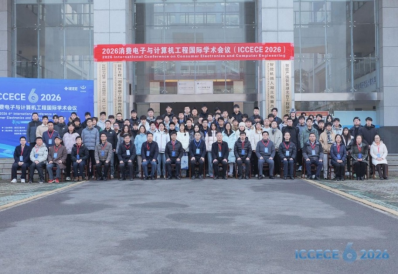
Relevant officials from the Office of Development Planning and Discipline Construction, Graduate School, Undergraduate School, International Exchange and Cooperation Center, and the Schools of Materials Science and Engineering, Mechanical and Electrical Engineering, Electrical and Information Engineering, and Optoelectronic Information and Energy Engineering (School of Mathematics and Physics) attended the conference.
Reviewed by Zhang Wei, Gui Zhanpeng, and Zhou Huabing