(Reported by Chen Le) In order to broaden academic horizons and promote interdisciplinary exchanges, on the afternoon of December 17th, the School of Computer Science and Engineering (School of Artificial Intelligence) at Wuhan University of Technology successfully held an academic lecture on "Rail Transit Operation Simulation - From Core Mechanisms to Cutting-edge Applications". The school specially invited Professor Cui Yong, an expert in transportation simulation, to give the lecture. The lecture was hosted by Xu Huaxin, Dean of the School of Computer Science and Engineering (School of Artificial Intelligence). Members of the school leadership, relevant professional teachers, doctoral students, and master's students attended the meeting.
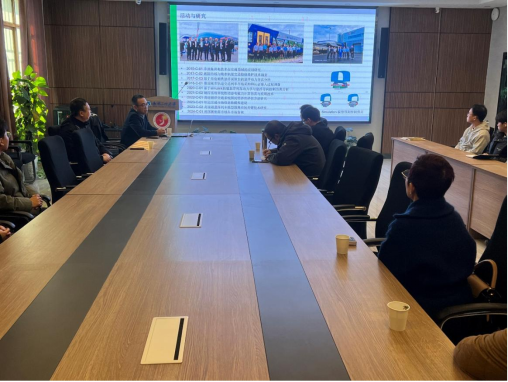
Professor Cui Yong systematically elaborated on the multi-layer model architecture of railway operation simulation technology, and deeply analyzed the core mechanisms of macro, meso, and micro simulation models, including key algorithms such as event-driven logic, conflict identification, and deadlock avoidance. He focused on introducing the calibration methods of simulation models and demonstrated the PULSim simulation platform, which was independently developed and open-sourced by his team. At the application level, Professor Cui Yong vividly demonstrated the frontier progress and practical value of simulation technology in areas such as train diagram preparation, intelligent dispatching, transportation capacity analysis, and hardware-in-the-loop testing through rich case studies.
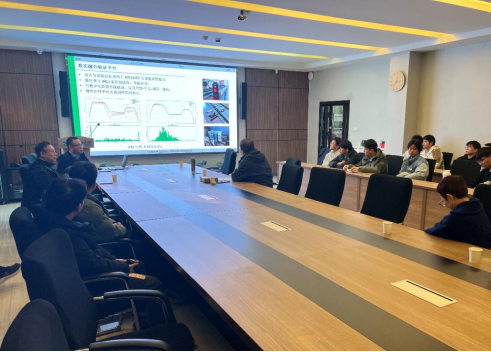
The successful holding of this report meeting not only broadened the research horizons of our teachers and students, but also enhanced everyone's comprehensive understanding of how simulation technology empowers the optimization of rail transit systems. It effectively promoted academic exchanges and the creation of an innovative atmosphere in the interdisciplinary field of intelligent transportation and simulation at our university.
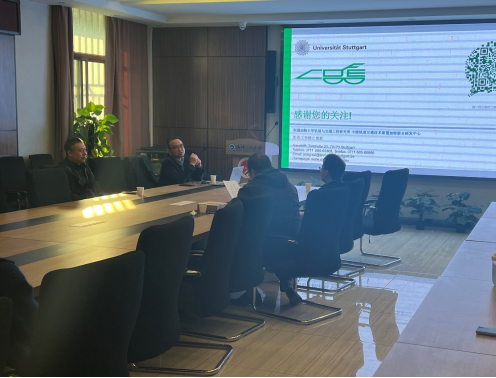
Expert Introduction: Cui Yong, a professor and doctoral supervisor, graduated from the University of Stuttgart, Germany, in 2009 with a PhD in Engineering. He once served as a project leader at a German research institution. He has long been dedicated to research in the fields of rail transit operation simulation, traffic system modeling and optimization, train dynamics simulation, public transport planning and control, and actively promotes the integrated application of machine learning and sensor technology in the transportation sector. During his time in Germany, he led multiple national-level major scientific research projects funded by the German Science Foundation, the German Federal Ministry of Economics and Technology, and the German Railway Company. He has published over 30 academic papers, including 12 indexed by SCI/EI, and authored 4 academic monographs (2 solo and 2 co-authored). His team has independently developed the open-source PULSim rail transit simulation platform, providing key tools and methodological support for industry planning and operational optimization.